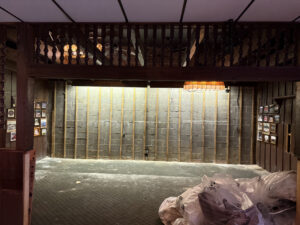



Structural steel can remain in service for decades. During that time, beams, columns, trusses, stairs, platforms, tanks, railings, and other metal components may receive several layers of protective paint.
In many older commercial and industrial facilities, one or more of those coating layers may contain lead.
A coating that remains intact and undisturbed may not create the same conditions as deteriorated paint or paint being removed. The potential for exposure increases when workers sand, scrape, grind, torch-cut, weld, drill, blast, demolish, or otherwise disturb lead-containing coatings.
These activities can produce dust, debris, chips, or fumes that affect workers and contaminate surrounding surfaces.
For facility managers, the central question is therefore not simply whether painted steel is present. It is whether upcoming maintenance, renovation, or demolition work will disturb the coating—and how that work will be evaluated, contained, and completed.
Early planning can help protect workers and occupants, prevent contamination from spreading, and keep the larger construction project on schedule.
Why Was Lead Used in Coatings on Structural Steel?
Lead compounds were historically added to industrial paints and coatings because they could improve properties such as durability, corrosion resistance, color retention, and protection against moisture.
These coatings were used on many types of metal components, including:
- Structural beams and columns
- Bridges and elevated structures
- Steel stairs
- Railings and guardrails
- Tanks and vessels
- Equipment supports
- Pipe racks
- Roof trusses
- Fire escapes
- Industrial machinery
- Doors and frames
- Loading structures
- Utility infrastructure
Although the use of lead in paint has been restricted in many applications, older coating systems can remain beneath newer layers.
A steel beam may appear to have a modern finish while older lead-containing coatings remain below the surface. That means the color, condition, or apparent age of the topcoat cannot confirm whether lead is present.
Testing and a review of available building records are more reliable than visual assumptions.
When Does Lead Paint on Steel Become a Project Concern?
Lead-containing coatings should be considered during planning whenever work may damage or disturb painted steel.
Common activities include:
- Sanding
- Grinding
- Abrasive blasting
- Power-tool cleaning
- Manual scraping
- Drilling
- Cutting
- Welding
- Torch burning
- Rivet removal
- Structural repairs
- Steel replacement
- Paint preparation
- Equipment removal
- Renovation
- Selective demolition
- Complete demolition
OSHA identifies renovation, removal, and demolition of structures painted with lead pigments as activities that may expose construction workers to lead.
The degree of potential exposure depends on the coating, work method, duration, surrounding environment, and controls used. High-energy activities such as abrasive blasting, grinding, and torch cutting can create very different conditions from a limited inspection or work near an intact surface.
Lead-containing coatings may also become a concern when paint begins peeling, chalking, flaking, or separating from corroded steel. Chips and dust can accumulate on floors, equipment, soil, ledges, or other horizontal surfaces.
Where Lead-Coated Steel May Be Found
Lead-containing coatings are not limited to one type of facility.
They may be encountered in:
- Manufacturing plants
- Warehouses
- Power-generation facilities
- Water-treatment plants
- Schools and universities
- Hospitals
- Commercial offices
- Parking structures
- Transit facilities
- Municipal buildings
- Bridges and transportation infrastructure
- Food-production facilities
- Historic properties
- Mechanical rooms
- Utility plants
- Nuclear or energy facilities
Facility managers should pay particular attention to areas that have remained in service through several renovation cycles. Mechanical rooms, interstitial spaces, roof structures, basements, loading areas, and utility zones may retain older coatings even when the occupied portions of the property have been modernized.
Step 1: Review Records and Define the Work
Lead planning begins with the proposed activity.
The project team should identify:
- Which steel components will be affected
- What work methods are being considered
- Whether the steel will remain or be removed
- How much coating will be disturbed
- Whether work will occur indoors or outdoors
- Whether the building will remain occupied
- What equipment or operations are nearby
- How workers will reach the steel
- How debris will be collected
- Whether welding or hot work is planned
- What schedule limitations apply
Available documents may include:
- Previous lead surveys
- Coating specifications
- Maintenance records
- Renovation drawings
- Environmental reports
- Safety data sheets
- Prior remediation documentation
- Building plans
- Paint-manufacturer records
Records can help identify likely concerns, but they may not represent every coating layer or every part of the facility. Field testing may still be necessary.
Step 2: Test Suspect Coatings
Visual inspection cannot reliably determine whether a coating contains lead.
A qualified professional may collect paint-chip samples or use another appropriate analytical method to evaluate the coating. The testing strategy should reflect the building, project scope, coating history, and applicable requirements.
When several coating systems or colors are present, sampling only one surface may not provide enough information. Different additions, renovations, or maintenance campaigns may have introduced different products.
Representative testing may be needed for:
- Different structural areas
- Interior and exterior steel
- Separate paint colors
- Multiple coating layers
- Components installed during different periods
- Areas with distinct maintenance histories
The resulting report should clearly identify where samples were collected, the laboratory findings, and how the results relate to the planned work.
Testing should occur early enough for the project team to incorporate lead controls into the budget, schedule, specifications, and contractor-selection process.
Lead Testing Is Not the Same as Worker-Exposure Assessment
Paint testing answers whether lead is present in the sampled coating. It does not, by itself, determine the amount of airborne lead a worker may encounter during a particular task.
Worker exposure can depend on:
- The method used to disturb the coating
- The amount of material disturbed
- Work duration
- Ventilation
- Containment
- Proximity to the work
- Equipment and tools used
- Existing surface condition
- Personal protective equipment
- Engineering and work-practice controls
Employers performing lead-related construction work must evaluate the tasks and determine the appropriate worker-protection measures under applicable occupational-safety requirements.
This distinction matters when planning the job. A report confirming lead in a coating does not replace a task-specific safety plan.
Step 3: Decide Whether the Coating Will Remain, Be Stabilized, or Be Removed
Not every project requires complete removal of every lead-containing coating.
Depending on the condition of the steel, the intended renovation, and the recommendations of qualified project professionals, potential approaches may include:
Leaving Intact Coatings in Place
An intact coating outside the work area may be left undisturbed if it does not interfere with the project. The location should be documented so future maintenance teams know lead-containing material remains.
Stabilizing Deteriorated Paint
Loose or damaged coating may be removed under controlled conditions, followed by proper surface preparation and application of a compatible coating system.
Encapsulation or Recoating
A new coating may be applied over a properly prepared existing surface to help isolate the underlying material. This approach does not remove the lead and can complicate future maintenance if the remaining coating is not documented.
Complete Coating Removal
Full removal may be required when the steel needs extensive repair, the coating has failed, a new coating system requires a clean substrate, or the component will be modified.
Removing the Steel Component
During demolition or equipment replacement, the coated component may be removed. Cutting and handling methods must still account for the lead-containing coating.
The correct option depends on structural, environmental, occupational-safety, operational, and long-term maintenance considerations.
Step 4: Select a Work Method That Matches the Conditions
Lead-coated steel can be disturbed in many ways, but different methods produce different levels and types of contamination.
Potential work methods include:
- Hand scraping
- Wet scraping
- Chemical stripping
- Needle-gun cleaning
- Power-tool cleaning
- Vacuum-assisted tools
- Abrasive blasting
- Water blasting
- Grinding
- Controlled cutting
- Component removal
- Specialized coating-removal systems
The selected method should account for:
- Worker exposure
- Dust and fume generation
- Building occupancy
- Ventilation
- Fire risk
- Waste generation
- Surface-preparation requirements
- Environmental releases
- Nearby equipment
- Noise and vibration
- Schedule and access
The fastest method in an open industrial yard may not be appropriate inside an occupied commercial building. Likewise, a low-dust method may take longer but provide better control around sensitive equipment or active operations.
The project team should evaluate the entire work environment rather than choosing a method based only on coating-removal speed.
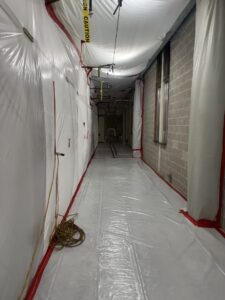
Step 5: Establish Containment and Access Controls
Lead dust and paint debris can migrate beyond the immediate work surface.
Containment may be required to protect:
- Building occupants
- Workers from other trades
- Adjacent tenants
- Production areas
- Mechanical equipment
- Finished surfaces
- Soil and stormwater systems
- Vehicles and stored materials
Depending on the project, containment measures may include:
- Polyethylene barriers
- Sealed work areas
- Controlled entry points
- Critical barriers
- Negative-air systems
- HEPA-filtered ventilation
- Ground or floor protection
- Debris-catching systems
- Scaffolding enclosures
- Decontamination areas
- Warning signs
- Restricted-access zones
Exterior projects require planning for wind, precipitation, runoff, and nearby properties. Interior projects require attention to HVAC pathways, doorways, shafts, elevators, and occupied circulation routes.
Containment design should reflect the work method. Grinding or blasting typically requires more extensive controls than a small, low-disturbance repair.
Step 6: Protect Workers
Lead can enter the body through inhalation or ingestion. Workers may inhale dust or fumes, transfer contamination from their hands to food or cigarettes, or carry dust away on clothing and equipment.
A project-specific worker-protection program may include:
- Exposure assessment
- Engineering controls
- Appropriate respiratory protection
- Protective clothing
- Gloves and eye protection
- Hygiene facilities
- Handwashing procedures
- Regulated work areas
- Medical surveillance when required
- Blood-lead monitoring when required
- Training
- Equipment decontamination
- Housekeeping procedures
- Change areas
- Prohibitions on eating, drinking, or smoking in contaminated areas
The exact requirements depend on the work and applicable OSHA standards.
Facility managers do not need to design a contractor’s respiratory-protection program, but they should verify that the selected contractor understands lead-related construction work and has a plan for protecting its employees.
Step 7: Protect Building Occupants and Other Trades
A lead-remediation project can affect people who are not performing the work.
Facility personnel should coordinate:
- Work-area boundaries
- Occupant relocation
- Shared entrances and corridors
- Elevator use
- Loading-dock access
- HVAC shutdowns
- Work hours
- Emergency routes
- Noise and vibration
- Daily cleaning
- Communication with other contractors
Other trades should not enter a lead-controlled area unless their work has been coordinated and the necessary protections are in place.
In occupied facilities, remediation may be performed in phases or during evenings, weekends, shutdowns, or scheduled closures. The approach should balance operational needs with the ability to maintain reliable containment.
Step 8: Coordinate Hot Work and Structural Modifications
Welding, torch cutting, and other hot work on lead-coated steel require careful planning.
Heating a lead-containing coating can create fumes, while cutting may release chips and residue. Paint may need to be removed from a defined area around the cut or weld using a controlled method before hot work begins.
The team must also account for:
- Fire-prevention procedures
- Combustible materials
- Ventilation
- Worker exposure
- Nearby occupied spaces
- Structural sequencing
- Temporary supports
- Coating restoration after the work
- Collection of removed paint and debris
The lead-remediation contractor, structural contractor, welder, safety personnel, and facility representative should understand where one contractor’s scope ends and the next begins.
Poorly coordinated handoffs can expose workers or result in previously cleaned surfaces becoming contaminated again.
Step 9: Manage Lead-Containing Waste
Paint chips, blasting media, dust, filters, cleaning materials, disposable protective equipment, and removed building components may require evaluation before disposal.
Waste handling may include:
- Collection at the point of generation
- Covered or sealed containers
- Appropriate labeling
- Protected temporary storage
- Waste characterization
- Transportation documentation
- Disposal at an authorized facility
- Record retention
Waste requirements can depend on the material, analytical results, generator status, project location, and applicable regulations.
Facility managers should avoid assuming that every item coated with lead paint is classified identically. The project team should determine the correct waste-handling requirements for the specific material and scope.
Step 10: Clean and Verify the Work Area
Lead work is not finished when the final coating has been removed.
The work area, access routes, equipment, scaffolding, and surrounding surfaces may require detailed cleaning.
Methods can include:
- HEPA vacuuming
- Wet cleaning
- Repeated cleaning cycles
- Cleaning tools and equipment
- Removing containment materials carefully
- Inspecting horizontal surfaces
- Collecting remaining paint chips and debris
The project specifications may require visual inspection, dust sampling, or another form of verification before the area is released.
Clear completion criteria should be established before work begins. Waiting until the end of the project to decide what constitutes an acceptable condition can create disagreements and delays.
Lead Paint and Selective Demolition
Lead-coated structural steel is often discovered during selective interior demolition.
Projects involving wall removal, ceiling demolition, mechanical upgrades, structural reinforcement, equipment replacement, or tenant improvements may expose painted beams and columns that were previously concealed.
If workers begin cutting, drilling, or grinding before the coating is evaluated, the project may need to stop while testing and controls are arranged.
The demolition plan should therefore identify:
- Steel that will remain
- Steel that will be modified
- Steel that will be removed
- Coatings requiring testing
- Demolition methods
- Debris routes
- Lead-remediation limits
- Handoff points between contractors
Coordinating lead remediation with demolition allows environmental controls to be integrated into the construction sequence.
Lead and Asbestos May Be Present in the Same Work Area
Older facilities frequently contain more than one regulated material.
A steel beam with lead-containing paint may pass through walls containing asbestos materials. Mechanical equipment may include asbestos gaskets or insulation. Flooring beneath the work could contain asbestos tile or adhesive.
The project team should evaluate the entire work area rather than focusing on one known hazard.
When lead, asbestos, mold, and demolition scopes overlap, integrated planning can reduce:
- Duplicate containments
- Conflicting work methods
- Repeated shutdowns
- Schedule gaps
- Additional mobilizations
- Cross-contamination
- Confusion between contractors
EHC Industries provides both lead remediation and asbestos-abatement services for commercial and industrial projects.
Common Planning Mistakes
Assuming Newer Topcoat Means No Lead Is Present
Older lead-containing layers can remain beneath newer paint. Testing should account for the complete coating system.
Waiting Until Construction Begins to Test
Late discovery can interrupt demolition, steel repair, painting, mechanical work, and other scheduled trades.
Using Ordinary Dust Controls
Lead work may require more specific containment, filtration, hygiene, and worker-protection measures than standard construction dust.
Failing to Evaluate the Work Method
Grinding, blasting, scraping, and torch cutting do not create identical exposure conditions. Controls should match the task.
Ignoring Adjacent Areas
Dust can move through doors, ventilation pathways, shared scaffolding, corridors, and work platforms.
Forgetting About Waste
The project budget and schedule should account for waste characterization, storage, hauling, and disposal.
Leaving Remaining Lead Coatings Undocumented
If some lead-containing paint remains, future maintenance teams should know where it is located and what precautions may be necessary before disturbing it.
Information Facility Managers Should Request
Before approving work involving painted structural steel, request documentation appropriate to the project, such as:
- Coating-testing results
- Defined work scope
- Contractor qualifications
- Written work procedures
- Containment plan
- Worker-protection plan
- Utility and hot-work coordination
- Waste-management plan
- Schedule and phasing plan
- Cleaning procedures
- Completion criteria
- Final project documentation
This information helps the facility manager understand how the work will affect the building, its occupants, and ongoing operations.
Lead Remediation for Structural Steel in Chicago and the Midwest
Lead-containing coatings on structural steel can turn an otherwise routine maintenance or renovation project into a specialized environmental scope.
The earlier the coating is identified, the more effectively the project team can select work methods, plan containment, coordinate other trades, and establish realistic costs and schedules.
EHC Industries provides professional lead-mitigation and remediation services for commercial, industrial, institutional, and infrastructure-related projects throughout Chicago, Illinois, Indiana, and Wisconsin.
Our experienced team can coordinate lead remediation with asbestos abatement, selective demolition, mold remediation, debris removal, and other environmental project requirements.
If your facility is planning structural repairs, repainting, equipment replacement, demolition, welding, or another project that may disturb painted steel, contact EHC Industries to discuss the appropriate next steps.
Contact EHC Industries or call (847) 526-9515 to request an estimate.
Frequently Asked Questions
How can I tell whether paint on structural steel contains lead?
You generally cannot confirm lead content through appearance alone. A qualified professional can collect representative samples and have them analyzed using an appropriate testing method.
Is intact lead paint on structural steel always required to be removed?
Not necessarily. Depending on its condition, location, future use, and applicable project requirements, an intact coating may remain, be stabilized, encapsulated, or removed. The selected approach should be based on professional evaluation and the planned work.
What activities can create lead exposure from painted steel?
Sanding, grinding, scraping, abrasive blasting, drilling, welding, torch cutting, structural modification, and demolition can disturb lead-containing coatings and create dust, debris, or fumes.
Can lead-painted structural steel be removed as part of demolition?
Yes, but the work method, worker protection, containment, material handling, and waste requirements must account for the lead-containing coating. It should not be treated as ordinary unpainted steel without proper evaluation.
What documentation should a facility manager receive after lead remediation?
Documentation may include testing results, daily project records, waste information, photographs, inspection results, completion reports, and records identifying any lead-containing coatings that remain in place.