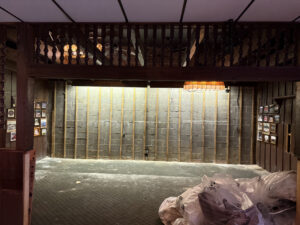



Managing an industrial facility comes with serious responsibility, especially when hazardous materials are involved. One of the most heavily regulated risks in older industrial buildings is asbestos.
Industrial asbestos abatement is not simply a maintenance issue. It’s a compliance, liability, and operational continuity issue that facility managers must proactively address.
For manufacturing plants, warehouses, processing facilities, and large commercial properties throughout Chicago and surrounding suburbs, understanding how industrial asbestos abatement works can protect your workforce, your company, and your bottom line.
What Facility Managers Should Know About Industrial Asbestos Abatement
Unlike residential removal projects, industrial asbestos abatement typically involves larger square footage, more complex mechanical systems, and higher worker exposure risk. That means regulatory scrutiny and safety expectations are significantly higher.
Industrial facilities often contain asbestos in:
Pipe insulation and pipe wrap
Boiler and mechanical room insulation
Spray-applied fireproofing
Industrial roofing materials
Floor tile and mastic
Equipment insulation and gaskets
If your facility was constructed before the 1980s, there is a strong likelihood asbestos-containing materials are present somewhere in the structure.
Proper industrial asbestos abatement begins with professional inspection and testing, followed by controlled containment and removal procedures that comply with federal, state, and local regulations.
OSHA & EPA Compliance Responsibilities
Facility managers are responsible for maintaining a safe work environment under OSHA regulations. When asbestos is disturbed during renovations, maintenance, or demolition, airborne fibers can create significant health hazards.
Industrial asbestos abatement must comply with:
OSHA asbestos standards
EPA NESHAP regulations
Illinois Department of Public Health requirements
Proper disposal and waste manifest documentation
Failure to follow proper procedures can result in:
OSHA citations and fines
Project shutdowns
Lawsuits related to employee exposure
Environmental violations
Documentation, air monitoring, and clearance testing are not optional, they are critical components of a compliant industrial asbestos abatement project.
Risk Management & Liability Exposure
Beyond regulatory fines, the long-term liability risk associated with asbestos exposure can be severe. Workers exposed to asbestos may develop illnesses years after exposure, including mesothelioma and other respiratory diseases.
For facility managers, that means:
Increased workers’ compensation claims
Potential long-term litigation
Insurance complications
Reputational damage
A proactive industrial asbestos abatement strategy reduces exposure risk and demonstrates due diligence in protecting employees and contractors.
Why Certified Industrial Asbestos Abatement Matters
Industrial-scale projects require more than basic removal capabilities. They demand experienced crews, proper containment engineering, and industrial-grade safety systems.
A professional industrial asbestos abatement contractor should provide:
Full containment systems with negative air pressure
HEPA filtration and air scrubbers
Continuous air monitoring
Certified asbestos supervisors on-site
Proper waste transportation and disposal
Industrial environments often operate on tight timelines. Working with an experienced remediation partner ensures the abatement process is handled efficiently while maintaining full compliance.
Planning Industrial Renovations or Maintenance?
If your facility is planning renovations, equipment upgrades, or interior demolition, asbestos assessment should be the first step. Disturbing materials without proper testing can escalate costs and halt projects unexpectedly.
In many cases, facility managers coordinate industrial asbestos abatement alongside:
Interior demolition
Lead paint removal
Mold remediation
Environmental cleanup
Early planning allows abatement to be sequenced properly within the overall project workflow.
Protecting Your Facility & Workforce
Industrial asbestos abatement is not a one-size-fits-all service. Each facility requires a tailored plan based on building age, material type, and operational needs.
For industrial and commercial properties throughout Chicago, Naperville, Aurora, and Joliet, EHC Industries provides compliant, safety-focused industrial asbestos abatement designed to minimize disruption and protect your workforce.
If you manage an industrial facility and need asbestos inspection, testing, or removal, contact EHC Industries to discuss your project and ensure your building remains safe and compliant.