

For commercial property owners, facility managers, developers, and general contractors, time is one of the most valuable resources on any construction project. Whether you’re renovating an office building, upgrading a healthcare facility, remodeling a retail center, or preparing an industrial property for redevelopment, every day of downtime can impact operations, tenants, schedules, and profitability.
While asbestos abatement is often a necessary step before renovation or demolition begins, it doesn’t have to bring your project to a standstill. With proper planning, experienced contractors, and strategic scheduling, commercial asbestos abatement can often be completed while minimizing disruptions to your business and construction timeline.
Understanding how to prepare for asbestos abatement and coordinate the process effectively can help keep your project moving safely and efficiently.
Why Downtime Is a Major Concern for Commercial Properties
Unlike residential projects, commercial buildings often have multiple stakeholders relying on continued access to the property.
Downtime can affect:
- Business operations
- Tenant occupancy
- Employee productivity
- Customer access
- Construction schedules
- Revenue generation
The longer a project is delayed, the greater the potential impact on both operations and project costs.
The goal of every commercial asbestos abatement project is to remove hazardous materials safely while limiting interruptions whenever possible.
Start With Early Asbestos Testing
One of the most effective ways to minimize downtime is by identifying asbestos before renovation or demolition begins.
Early asbestos testing allows project teams to:
- Develop accurate construction schedules
- Coordinate abatement with other trades
- Budget appropriately
- Avoid unexpected work stoppages
- Prevent emergency schedule changes
Waiting until demolition begins to discover asbestos almost always results in longer delays and additional costs.
Develop a Detailed Project Schedule
Commercial asbestos abatement should never be treated as an isolated task. It should be fully integrated into the overall construction schedule.
Planning ahead allows contractors to:
Coordinate Multiple Trades
Construction crews can continue working in unaffected areas while asbestos abatement is completed elsewhere.
Schedule Around Business Operations
Projects can often be planned during weekends, evenings, holidays, or scheduled facility shutdowns to reduce disruptions.
Reduce Idle Time
Careful sequencing helps prevent subcontractors from waiting unnecessarily while environmental work is completed.
A coordinated schedule benefits everyone involved in the project.
Use Phased Construction Whenever Possible
Many commercial projects do not require an entire building to be closed during asbestos abatement.
Instead, contractors often divide projects into manageable phases.
Floor-by-Floor Renovations
Large office buildings can frequently undergo renovations one floor at a time.
Tenant-by-Tenant Improvements
Multi-tenant facilities may complete environmental work in individual suites while neighboring businesses remain operational.
Department-Based Scheduling
Healthcare facilities, schools, and industrial buildings often isolate specific departments while maintaining operations elsewhere.
Phased construction allows organizations to continue functioning while environmental work progresses.
Proper Containment Protects Occupied Areas
Containment systems play a critical role in minimizing downtime.
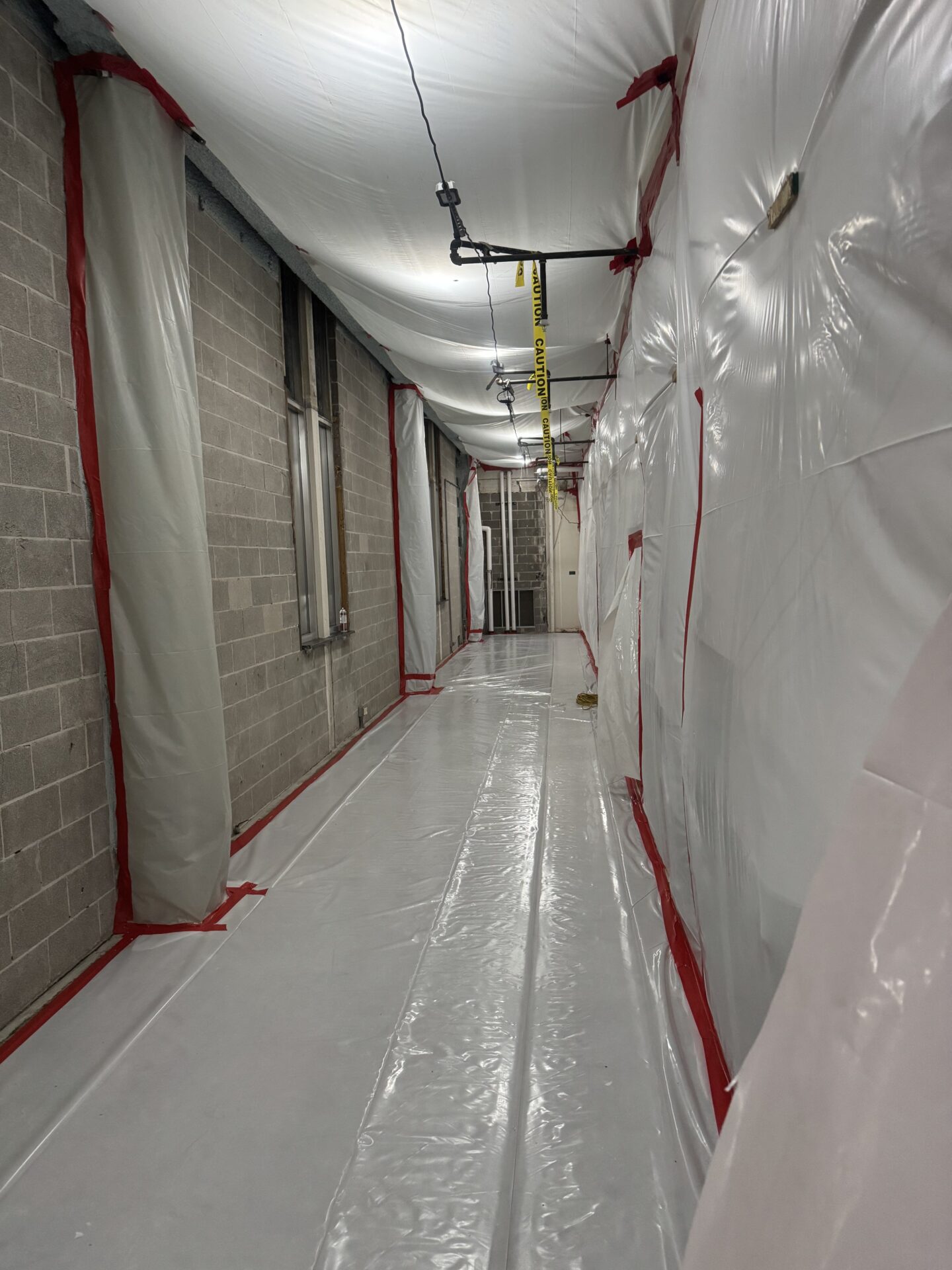
Professional asbestos contractors establish controlled work zones designed to isolate asbestos-containing materials from occupied portions of the building.
Containment typically includes:
- Temporary barriers
- Negative air pressure systems
- HEPA filtration equipment
- Controlled entry points
- Worker decontamination stations
These systems help prevent contamination from spreading and allow unaffected areas to remain operational whenever appropriate.
Maintain Clear Communication Throughout the Project
Successful commercial asbestos abatement depends on effective communication between all project stakeholders.
Property owners should ensure regular communication with:
- General contractors
- Facility managers
- Tenants
- Employees
- Architects
- Engineers
- Environmental consultants
Providing regular updates helps occupants understand:
- Work schedules
- Restricted areas
- Safety procedures
- Expected completion dates
Good communication reduces confusion and improves overall project coordination.
Choose an Experienced Commercial Asbestos Contractor
Experience matters when minimizing project downtime.
Commercial asbestos contractors understand how to work within active business environments while maintaining safety and regulatory compliance.
Experienced contractors know how to:
Coordinate With Construction Teams
Environmental work should support—not delay—the overall construction schedule.
Work in Occupied Facilities
Many commercial projects require specialized planning to minimize disruption while maintaining safe operations.
Solve Unexpected Challenges
Experienced contractors can adapt quickly if unforeseen conditions arise during the project.
Choosing the right contractor often has the greatest impact on project efficiency.
Prepare Occupants Before Work Begins
If portions of the building will remain occupied, advance planning helps reduce operational disruptions.
Building occupants should receive information about:
- Temporary access restrictions
- Alternative entrances
- Parking changes
- Construction schedules
- Safety procedures
Clear expectations help businesses continue operating while environmental work is underway.
Plan for Clearance Testing
One step that is sometimes overlooked is scheduling final inspections and clearance testing.
After asbestos-containing materials have been removed, the work area must often undergo:
Visual Inspection
Contractors verify that all regulated materials have been removed.
Air Monitoring
Testing confirms that airborne asbestos fibers are within acceptable levels.
Final Clearance
Once clearance requirements are satisfied, renovation or demolition activities can resume safely.
Planning for these final steps helps avoid unnecessary scheduling delays.
Benefits of Properly Planned Commercial Asbestos Abatement
When asbestos abatement is integrated into the overall project plan, commercial property owners often experience:
- Fewer construction delays
- Better project coordination
- Reduced business interruptions
- Improved regulatory compliance
- Enhanced worker and occupant safety
- More predictable project timelines
Proper planning transforms asbestos abatement from an unexpected obstacle into a manageable phase of the construction process.
Commercial Asbestos Abatement Services in Chicago
Commercial asbestos abatement doesn’t have to disrupt your entire project. With early planning, strategic scheduling, and experienced project management, environmental remediation can be completed efficiently while supporting overall construction goals.
At EHC Industries, we partner with commercial property owners, developers, facility managers, municipalities, healthcare organizations, educational institutions, and general contractors throughout the Chicago area to complete asbestos abatement projects with safety, compliance, and efficiency in mind.
Our team understands the importance of maintaining project schedules while protecting workers, occupants, and the surrounding environment. From initial planning through final clearance, we work to minimize downtime and help clients move confidently into the next phase of construction.
If you’re planning a commercial renovation or demolition project, contact EHC Industries to learn how proactive asbestos abatement planning can help keep your project on schedule.
Frequently Asked Questions About Commercial Asbestos Abatement
Can a commercial building remain open during asbestos abatement?
In many cases, yes. With proper containment, phased construction, and safety protocols, portions of a commercial building can often remain occupied during asbestos abatement.
What is the best way to reduce delays during asbestos abatement?
Early asbestos testing, careful scheduling, phased construction, and hiring an experienced commercial asbestos contractor are the most effective ways to minimize delays.
Does asbestos abatement delay every construction project?
Not necessarily. When asbestos is identified during the planning phase, abatement can often be incorporated into the construction schedule with minimal disruption.
How do contractors protect occupied areas during asbestos removal?
Professional contractors use containment barriers, negative air pressure systems, HEPA filtration, and restricted access zones to isolate work areas and prevent contamination from spreading.
Why should I hire a contractor experienced in commercial asbestos abatement?
Experienced commercial contractors understand how to coordinate with multiple trades, maintain compliance, work in occupied facilities, and complete projects efficiently while minimizing disruptions to business operations.
Contact us today at EHC Industries for help with your asbestos abatement needs.