

Moisture intrusion in commercial buildings is more than a maintenance issue, it’s a legal, operational, and health concern. When mold develops in offices, industrial facilities, healthcare spaces, or multi-tenant properties, it can expose building owners and facility managers to significant liability.
Commercial mold remediation requires a structured, compliance-focused approach to ensure safety, documentation, and long-term resolution.
For property managers and business owners throughout Chicago and surrounding suburbs, understanding the regulatory and financial implications of mold contamination is essential.
Why Commercial Mold Remediation Requires a Compliance-First Approach
Unlike residential mold cleanup, commercial mold remediation often involves:
Larger HVAC systems
Shared air circulation
Employee and tenant exposure
Insurance reporting requirements
Operational downtime
When mold spreads in a commercial building, it can impact productivity, tenant satisfaction, and regulatory compliance.
Professional commercial mold remediation focuses on identifying the moisture source, containing affected areas, and safely removing contaminated materials while protecting occupants and workers.
How Mold Impacts Commercial Liability
Unchecked mold growth can lead to:
Employee health complaints
Workers’ compensation claims
Tenant disputes
Lease termination issues
Property value reduction
For facility managers, ignoring or improperly handling mold can create long-term financial consequences.
Proper commercial mold remediation demonstrates due diligence and reduces exposure to legal claims. Documentation, air quality testing, and clearance verification are critical parts of this process.
Regulatory & Documentation Requirements
While mold itself is not regulated the same way asbestos is, OSHA requires employers to maintain safe indoor air quality. In addition, insurance carriers and local health departments often require proper documentation during remediation.
Professional commercial mold remediation includes:
Moisture mapping and inspection
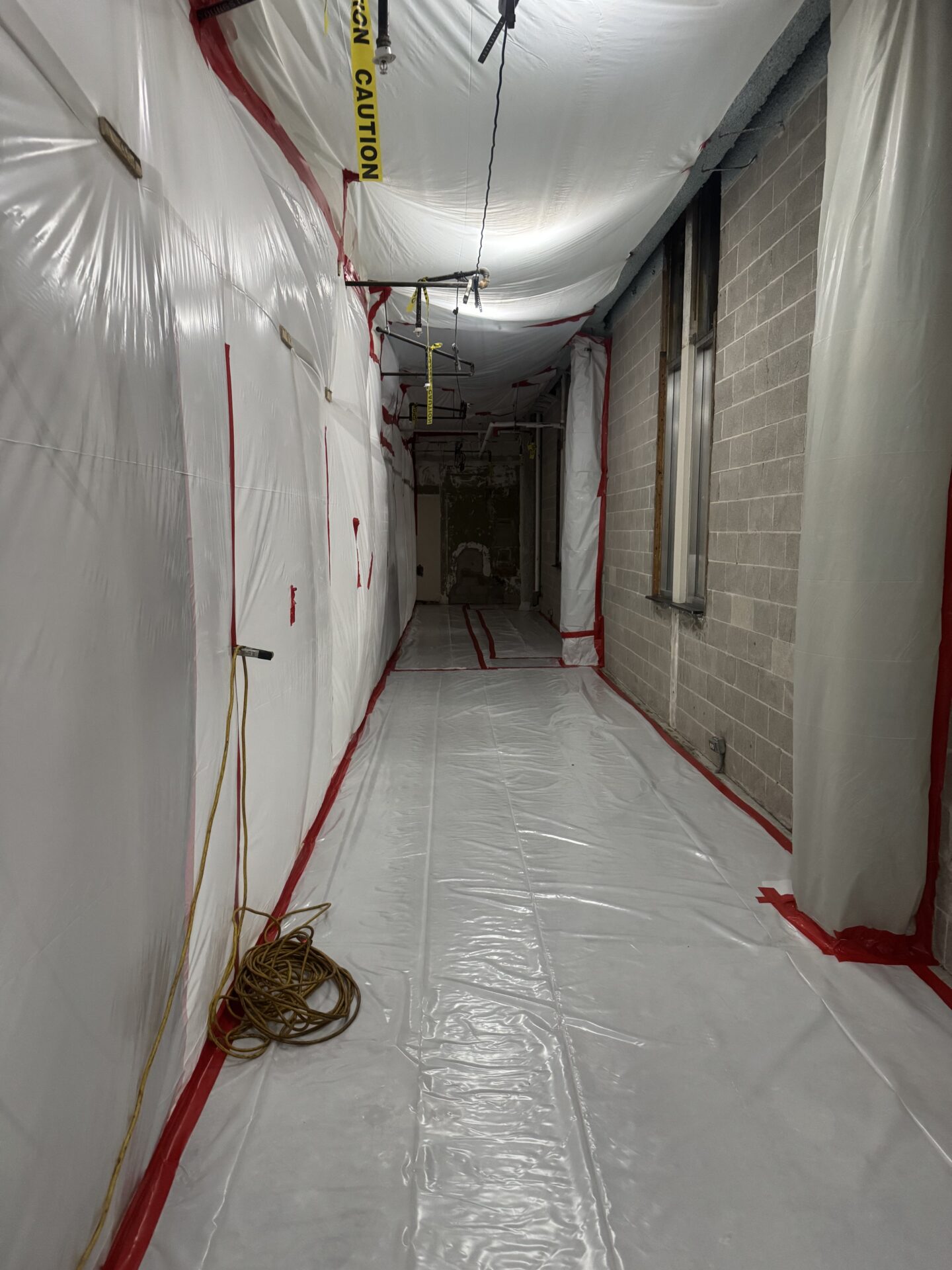
Containment barriers
Negative air pressure systems
HEPA filtration
Safe removal of contaminated materials
Post-remediation verification testing
Clear documentation protects building owners and helps ensure regulatory expectations are met.
The Risks of Incomplete Mold Remediation
One of the biggest mistakes commercial property owners make is relying on surface-level cleaning. Simply wiping down visible mold does not address hidden contamination or airborne spores.
Incomplete remediation can lead to:
Recurring mold growth
Cross-contamination through HVAC systems
Ongoing health complaints
Repeated insurance claims
True commercial mold remediation addresses both the visible growth and the underlying moisture source. Without moisture correction, mold will return.
Why Professional Commercial Mold Remediation Matters
Commercial buildings require strategic containment and minimal operational disruption. An experienced remediation contractor understands how to work in:
Office buildings
Schools
Warehouses
Healthcare facilities
Manufacturing plants
A professional team will coordinate with facility managers to minimize downtime while ensuring complete and compliant mold removal.
Protecting Your Building & Occupants
If your commercial property in Chicago, Naperville, Aurora, or Joliet has experienced water damage, roof leaks, flooding, or HVAC condensation issues, mold growth may not be far behind.
Early intervention is critical. The longer contamination spreads, the more costly and disruptive the remediation process becomes.
EHC Industries provides professional commercial mold remediation services designed to protect your building, your employees, and your liability exposure.
If you suspect mold in your commercial facility, contact EHC Industries to schedule an inspection and remediation plan.